true love

A New Chapter Begins: Tell Me I Am Not Invisible Now Taking Shape!

Submitted by brucewhealton on

I’m honored to share that my newest memoir,
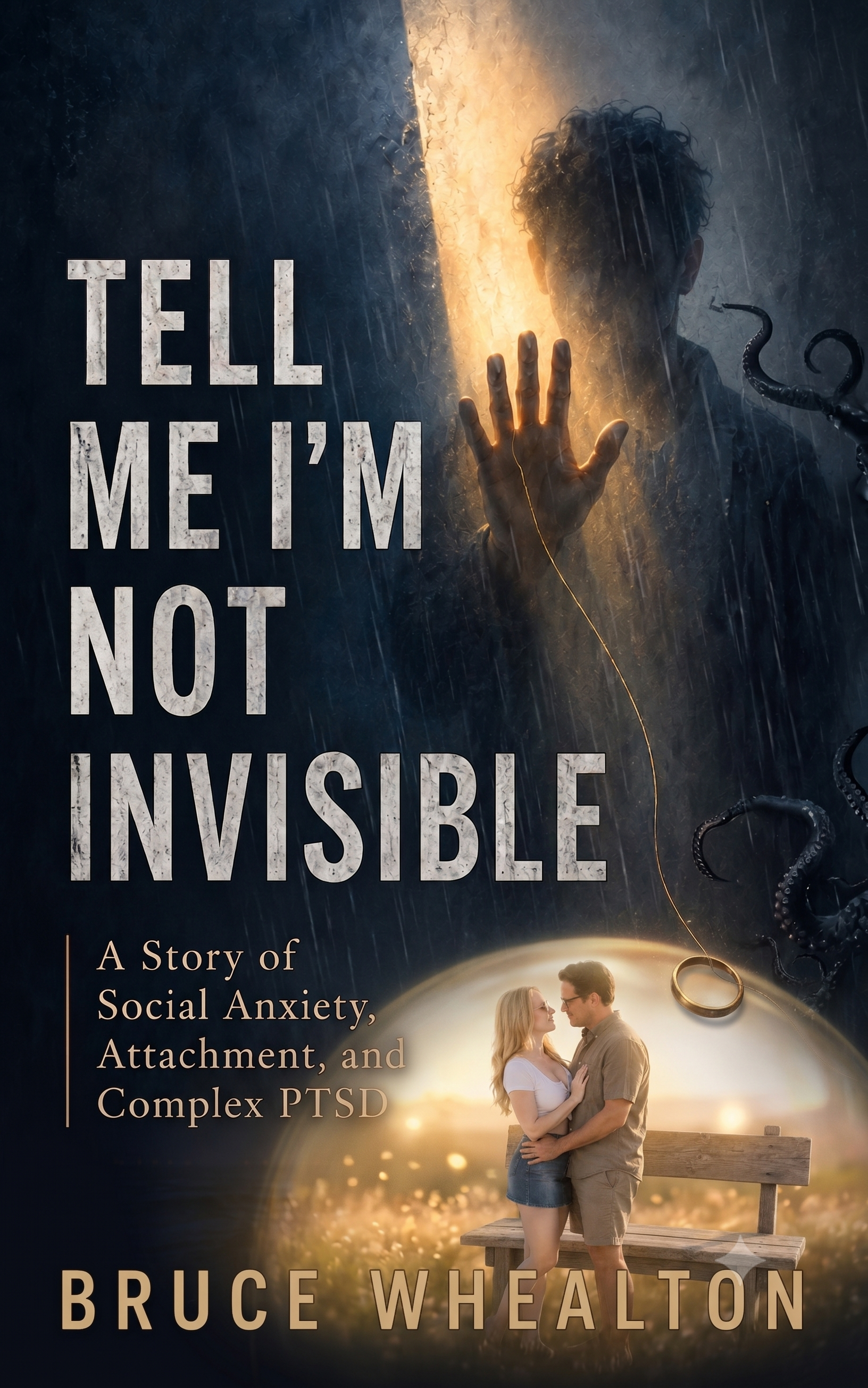
Tell Me I Am Not Invisible: A Memoir of Love, Loss, and Learning to Live Again,
is now unfolding live on my website.

The book is told in two parts.
Part I is the story of becoming — a journey of emerging from emotional deprivation and shame to discover love, creativity, and purpose.
Part II, still being finalized, will explore the heartbreak of loss, trauma, and the long road to healing.

Chapter 33: When Two Become One Body - Love, Beauty & Serenity

It was April 15, 2000. I had a few books stacked beside the bed—reading material that reflected the many states of mind I moved through in a week: psychodynamic theory, ego state therapy, even a book written by a woman with dissociative identities using collages and magazine cutouts to represent the parts of herself.


I had been reflecting on all of it—how we carry different selves inside us, how trauma and healing play out over time—when Lynn appeared at the doorway.

She had that mischievous smile I loved.


“I want sex,” she said, straightforward as ever.


My heart lifted. “Me too.”


We undressed quickly, comfortably. Familiar, yet new each time. The kind of comfort and chemistry that only deep love can produce. When she moved toward the bed, her gaze locked with mine, I felt the same awe I always did. Like seeing her again for the first time.


She climbed on top of me, our lips finding each other fast, hungry. Her body pressed close, arms wrapped tightly around me, the space between us seeming to vanish.


“I feel like I can’t get close enough,” she breathed, her mouth pressing into mine like she was trying to merge with me—hungry, urgent, needing more than just touch.


“I know,” I said, pulling her even closer.


She shifted, her breath catching as our bodies moved together. Then, gently but firmly, she paused.


“You’re too close, sweetie,” she said with a soft sigh, her meaning unspoken but understood.


We had talked about it before—her health, the impossibility of pregnancy due to her condition. It was the one boundary we couldn’t cross, no matter how much we wanted to become one in every way.


But still, we held each other. Moved together. Loved each other as fully as two people can.


The intensity built. She clung to me, her body not arching but wrapping itself around mine—like she was trying to become part of me. Our mouths met again and again, hungry, urgent, like we could dissolve into each other if we just held tight enough.


And then—suddenly—I let go.


She felt it. Paused. Still. A quiet smile crossing her face.


There was silence, the kind that only happens when two people have given something wordless to each other.


She whispered, “We should shower.”


I caught my breath. “But you…”


She looked at me, her eyes soft. “I'm happy,” she said. “It’s okay.” 

I was confused a bit and wanted more for her.


This was about connection. About wanting and being wanted. About love so deep that it didn’t need to be measured. It amazed me that this kind of passion was still happening nearly every day - like we were newlyweds. Yet, we were years into the life as husband and wife. It didn’t feel routine. It felt alive. Urgent. Sacred.


Afterward, she went to start the shower while I stayed in bed, a wave of serenity washing over me.


We were in love—because she was in love with me. Because I was in love with her. Because we had become, in so many ways, one.


“I love you,” she said as we stepped into the water together.


“I love you so much,” I replied, heart full.


Then I laughed softly.


“What?” she asked.


“I was just thinking of that song by The Moody Blues—the way the singer repeats those lines like he’s overcome, like he just can’t hold it in.”


I spoke the words that the singer in the song sang:

'Cause I love you,
yes, I love you,
oh, how I love you,
oh, how I love you…'


“That’s how I feel,” I told her. “I want to tell the whole world that I love Lynn.”


She smiled, the way she always did when she knew I meant every word.


And I did. I would have shouted it from rooftops. Not just after making love, but anytime. Every day.


That night, as I lay beside her, I started thinking about her dreams. About how much I wanted her happiness. She had talked about getting her Master of Fine Arts one day. Maybe I could help with that. Maybe I could buy her a kiln so she could fire her pottery at home. Maybe, with this practice I was building, I could give her more than just love. I could give her the things that filled her dreams.


I was in love. Not just based on the passion we shared but the peace and serenity that matched our connection together.

Chapter 25: My Other Family – Holding On to Lynn

By the summer of our second year together, I can remember standing on a porch during one of Lynn’s pottery events. I didn’t know anyone else there. I felt a little out of place—but not alone. It was summer.


We walked in hand-in-hand.


Later, feeling a bit awkward I found a seat at a picnic table. Lynn right near me. I reached for her arm and whispered, “Sit on my lap,” guiding her gently as she sat my lap and turned to face a friend talking. There was a pause in her conversation as her acquaintance drifted away. My eyes were suddenly captivated by the shape of her leg revealed by her very short shorts - probably not even trying to be seductive… and her foot with a open sandle dangling there.


My thoughts were playful and seductive. My hand ran up her leg and kept moving, as if no one was watching. She just turned to grin at me. Not telling me to stop, just knowing we were in public and we understood that.


Her body against mine was familiar by now, and this was one of those moments when desire mingled seamlessly with peace. She turned to me and asked sweetly, “Are you doing okay, sweetie?”


My hand had stopped but still was on her leg. My answer was “Oh, yeah, I’m good.” She understood and smiled knowingly.


This wasn’t the only moment of sexual playfulness nor was I the one acting. Even while I was driving… well that’s a private matter… or was it? The memory. I was driving and whether or not a person higher up in a truck might see didn’t seem to change Lynn’s actions or desires to pleasure me… and not needing to ask permission. It would be like asking for consent to tickle a person - the non-predictable nature of the action makes it work.


Later, we visited my parents for Christmas. It seemed natual to do. I was clearly not comfortable with this despite choosing to visit. Part of me wanted to show them the beautiful and loving lady that I had, as if they cared. Another part of me wanted to show what love looked like.


It was about being close as a natural thing, not like newly we were newly weds but we were just close to one another. Being in their home made me nervous. I saw Lynn speaking to my mother and got up close… I wrapped my arms around Lynn. It said “I’m with her and not you.” It also said to Lynn, “I need you.”


Intimacy as Discovery, Not Performance

I had studied Masters and Johnson. I had worked with clients who described their sex lives in clinical detail. I knew the theories about compatibility, erogenous zones, dysfunction, technique. But nothing in those textbooks prepared me for what it meant to discover someone’s body through love—not judgment, not comparison.


Lynn and I weren’t performing for each other. We were exploring. We weren’t trying to “get it right.” We were figuring out what felt good—what was comfortable, what was sacred. There was no pressure to be experienced or skilled. There was only curiosity, trust, tenderness.


I never expected oral sex, and she didn’t either. Perhaps that was because of my queasiness about mucus, a recurring challenge due to her illness. I once admitted to her that I struggled with things like sputum samples. She understood. She never made me feel ashamed of that discomfort. And in return, we both created a space where no part of each other was taboo—even if there were boundaries.


We explored everything else. Joyfully. Lovingly. Respectfully.


And as time went on, we knew what we liked, what to ask for, and how to listen to each other’s bodies without shame.

The Sacredness of Sex

For me, sex with Lynn was never casual. It was sacramental. I was still a Christian at the time, and I believed deeply in the idea of two becoming one. Our bodies were our offerings. Our souls met in that intimacy—not in spite of her illness, but in full knowledge of it.


And yes, I was a romantic. But this wasn’t just romance. This was a spiritual union. And when we were wrapped together, as one body; I felt more connected to the divine than I ever had inside a church.


It’s true—some people confuse physical pleasure with love. But we weren’t confused. We were making love. And we did so not as an obligation, or a performance, but as a celebration of everything we were to each other.


If I’m honest, I was learning to be free in my body by loving hers. I wasn’t trying to impress her. I was just trying to love her as fully as I could. And she gave me the safety to do that.


That was the miracle.


Not the sex. Not the affection. But the safety. The shared knowing.


I had never known that before.

And I have never known it since.

Chapter 24: The Illness We Tried to Forget

By 1996, I was thirty. And while Lynn and I lived with the rhythm and comfort of a shared life, I hadn’t lived with her illness since birth. I wasn’t raised in its shadow. She was. I was still learning. Still catching up. And in many ways, still trying to forget what we were up against.


Occasionally, she would use an inhaler, but that didn’t seem to happen very frequently.


I drove her—or we drove together—to her clinic appointments in Chapel Hill. From Wilmington, that was a drive of over two hours. It happened, for the most part, only once a year.


They would check her oxygen saturation, take X-rays to see the scarring and the buildup of mucus in her chest.


Lynn was good about letting me sit in on every meeting, even in the examination room with the nurse and the doctor. Most of the time, we felt lucky. She was incredibly healthy for someone with such a serious disease.


Sometimes, I left the room when they needed to collect a mucus sample. Lynn understood. I had a weak stomach.


But even so, I asked a thousand questions. 'What’s that dark spot on the X-ray? Is that mucus or scarring?'


'Here’s some excess mucus that needs to be cleared,' the doctor might say, 'and here’s some scarring.'


'How do we clear it?' I’d ask. 'Have you learned how to do the tapping?' they'd respond.


'Yes, the physical therapist taught us,' I’d answer. But I was still full of worry.


The doctor would explain devices we could use. But Lynn would say, 'It doesn’t clear it out for me. I can tell it’s still there.' Then she’d turn to me and remind me, gently but firmly, 'I told you I needed help with it the other day.'


And I’d feel the guilt wash over me. “Oh God, Lynn, I’m sorry. I’m scared when you’re not well. It makes me feel helpless, and I hate that. But I’m trying. I really am.” I would then add, “Wait, that’s not good enough. I can NOT just be trying. I have to do whatever is possible.”


Then I’d add, with tears in my eyes, “I just want a normal life. You make me happy. I don’t want to lose you.”


“I know, sweetie,” she’d say. “I’ve had more time to process this.”


I wanted to be strong but the tears wouldn’t stop. “I love you, Lynn. I love you so much.”


I then looked at the doctor that conveyed a look of displaced anger, as if he was a cause of this or wasn’t doing enough… as if he ought to answer for why this was happening.


Then I sked the doctor, “So, how often should I do the tapping?“


'Fifteen to thirty minutes each evening,' came the reply.


And then the scarring—the thing I dreaded most. It was permanent. It made her lungs less elastic. It meant that even if they found a cure, some damage couldn’t be undone.


I could talk to clients at a psychiatric hospital about grief, loss and mental illness. Mostly I was helping people deal with non-physical problems. But this wasn’t that. This was a physical problem. This was personal. This was my life. This was Lynn.


The secret I didn’t want to face was that CF could take her from me. I pushed that thought away most days. But not in those clinic rooms. In those rooms, I had to look it in the eye.


The darkness in her lungs—visible in patches on the X-rays—felt like the darkness creeping into our lives.


Then came late 1996. Lynn had to be hospitalized. Her lung function was declining, and the doctors wanted to admit her for IV antibiotics.


They were trying a new combination of drugs—ones believed to be more effective in CF patients. People were living longer now, they said. But that didn’t make it less terrifying.


We waited in the hospital lobby, trying to be calm. I wasn’t. I couldn’t sit still. My stomach turned with anxiety.


When they called us in, I sat on the edge of her bed, holding her hand as they placed the IV. 'What’s that?' I asked the nurse.


'Just saline,' she said. 'The medications will come later.'


We sat quietly for a few moments. 'Do you want to play cards? Or read?' I asked.


She asked for a new book by Anne McCaffrey, her favorite fantasy author.


'I want to stay with you,' I said.


'I’m glad you’re here,' she replied.


'I’ll bring a book too,' I added. 'We’ll just be together.'


She smiled. 'That sounds good.'


She suggested I meet her friend Carolyn, who also had CF. 'You’ll like her,' she said. Carolyn was up here in Chapel Hill at this point.


'We’ll see her when you’re discharged,' I promised.


Later that evening, while Lynn was in the shower, a nurse knocked on the door and asked for her. They needed to change her dressing around the IV.


She’s in the shower,” I said. The nurse paused. I got up and said, “I’ll let her know.” This was a door that I alone would or could open.


No awkwardness. No explanations. No embarrassment. Concealing the view from anyone but myself,with the nurse waiting, I got up, opened the door to the bathroom and conveyed the message that the nurse needed to do something.


There was no veil of privacy between us anymore. We had already lived through enough—the bodily, the vulnerable, the raw. Her illness had already taken us into places most couples don’t talk about. This was simply part of it. A moment like any other.


And yet, it was meaningful. It signified a level of trust, of sacred familiarity. She wasn’t hiding. I wasn’t hiding. And no one - least of all the staff - treated our intimacy as strange or inappropriate. We weren’t legally married. But no one asked. They didn’t need to. Everyone in that room, on that unit, understood what love looked like; what a couple looked like.


That night, I stayed. Visiting hours had ended, but no one made me leave. I climbed into the bed beside her, gently moved the IV, and wrapped my arm around her.


A nurse opened the door to check in. She saw us, said nothing, and closed it again. There was a place for family members to stay but we were not disturbed.


Eventually, Lynn came home. And just like that, life returned to normal—or what passed for normal. And I held tighter to the fantasy that we had all the time in the world.

Chapter 23: The Body, Illness, and the Ghosts of Shame

There’s a kind of silence that doesn’t come from others—it comes from inside. It’s the silence born of shame, planted early, before you have the words to resist it. It tells you your body is something to hide. That pleasure is dangerous. That certain fluids—mucus, discharge, even tears—are “unclean.”


That silence shaped me long before I ever met Lynn.


It started in childhood. I had a single memory of something like anal continence when I was young perhaps in 2nd grade, and instead of comfort or understanding, what I felt was dread. Not just of the accidents themselves, but of discovery. Then later I discovered Freud’s pleasure principle and discovered what happened. It could not possible be discovered. But why? Because for a moment I embraced pleasure as a young child?


I lived in fear that my mother might find evidence of my body’s betrayal—and reject me for it. There were no open conversations. No space to ask questions or seek reassurance. Just shame. Shame for being seen.


Shame for being human.


So I learned to hide. To compartmentalize. To disconnect.


Then, as an adult, I met Lynn. And Lynn lived in her body with honesty. She didn’t apologize for it. She wasn’t provocative—she was present. When she undressed, it wasn’t for show. It was for trust. For closeness.


Her body was not a performance. It was an invitation: See me. Hold me. Love me. It was also something she knew I wanted.


But I was still unlearning.


Cystic Fibrosis is a disease of the lungs, but its calling card is mucus—thick, persistent, impossible to ignore. It wasn’t abstract. It was physical. It showed up on tissues, in coughing fits, in the way her breath caught just a second too late. It interrupted kisses. It was a signifier of something I wanted to deny.


And I HATED it… wanted to destroy it. It wasn’t just frustration—it became a fantasy of justice. A yearning for something I could see and fight.


More than once, I dreamed that CF was a demon. Not a metaphor. A literal monster. Like something out of Buffy the Vampire Slayer. I pictured it stalking through hospital halls, feeding off the weak, coming for my beloved. In that daydream, it came for stalked Lynn and I wanted to kill it. Not for a second did I consider whether this monster could hurt me. I was eager and ready to kill it.


Because this thing—the mucus, the coughing, the breathlessness—it wasn’t just a symptom. It was a violation. A thing that didn’t belong in the sacred space that was Lynn’s body. And I couldn’t do anything in reality. I was powerless.


But the shame - the programming - still whispered. It got mixed into a combination of secret discoveries of pleasure and signs of a disease that interfered with the normal life that we were building.


Lynn never kept me at a distance from her illness. When we met with the respiratory therapy team or sat through hospital consults, no one asked if I had the right to be there. They didn’t question whether I was her husband. They didn’t blink when I was invited into the examination rooms or into conversations that would typically remain private. They knew. Everyone knew.


I wasn’t just a visitor. I was her partner. And I needed to understand everything—how Cystic Fibrosis worked, what it did to her lungs, what we could do to fight it. I needed to know the terrain of the body we were both trying to protect.


I wasn’t just the person giving her a ride from Wilmington to Chapel Hill. I suppose Lynn conveyed something profound in calling me her fiancé.


The respiratory team showed me how to help. How to tap her chest and sides to loosen the mucus. There was no awkwardness. No question of whether it was appropriate for me to touch her there—across her chest, her ribs, even over her breasts. It wasn’t new. It wasn’t foreign. It was sacred. It was care. It was love.


It was our life that I tried to normalize - we were just two poets, two creative types who fell in love.


And what’s more: Lynn never flinched. Never acted like there was anything I shouldn’t see. Her body was never a battleground between intimacy and decency. It was our terrain—hers, yes, but shared in trust. I knew how to soothe it. How to support it. And how to mourn it, quietly, when she needed more than I could offer.


There was no shame there. No performance. No false modesty. Just the raw, necessary truth of what it meant to love someone whose body was fighting a battle it never chose.


Her body—beautiful, fragile, strong—was the first place I ever felt truly wanted.


And it was also the battleground.


I never saw her as broken. But I sometimes feared I was. That the silence I’d learned in childhood had cost me something sacred. That my uncertainty, my hesitation, my effort to unlearn shame was something she had to bear with me.


Years later, with someone else—Codi Renee—I found myself embracing physical pleasure more freely. I offered the kind of tenderness and desire that, in truth, was always meant for Lynn—the one I had truly been in love with.


But in my confusion, I mistook that willingness—my openness, my eagerness to give—for something deeper. I thought it meant I loved Codi Renee. I wanted to believe it. She even insisted it must be true because I said so.


But it wasn’t love. It was never love.


It was physical attraction wrapped in the illusion of connection. Desire masquerading as devotion. I see that now. And it feels tragic—not because I gave myself too freely to someone else, but because Lynn, the one who had loved me fully, the one who had taught me how to open, didn’t get to receive the fullness of what she awakened in me.


She deserved that depth. That freedom. That joy.


What I gave Codi Renee was shaped by what Lynn helped me discover. But the motivation with Codi Renee wasn’t love—it was the desperate hope of being good enough for someone who kept me at a distance. The desire to be chosen. To prove I could be desirable.


Lynn never made me prove anything. With her, I was already enough.


This isn’t a chapter of regret. It’s a chapter of recognition.


I recognize now that Lynn didn’t just teach me how to love—she taught me how to stay. To sit with what’s hard. To touch what’s vulnerable. To stop pretending that we need to be “clean” (whatever that means) and whole to be worthy of love.


CF never gave me the fight I wanted. No monster in the hallway. No thing to destroy. But Lynn gave me the chance to fight in smaller, truer ways. To stand beside her. To learn that sacredness isn’t found in perfection—but in discovery of each other with no expectations.


In every tear, in every kiss, in every quiet act of care—we were writing a new language. A new covenant.


One that said:

You are not disgusting. You are not broken. You are not alone.

You are loved.

Chapter 22: Building a Home, Weathering the Small Storms

The life I had with Lynn felt like the culmination of a lifelong dream. I had a career that was beginning to take shape, but more than that—I had a partner. A family. Even though we couldn’t have children, we were a family. That truth carried weight and meaning.


From the outside, some might have seen our relationship through a distorted lens. But it was the ability to argue, to disagree—and to talk about anything—that made our connection so strong. I don’t remember my parents ever disagreeing about anything, which now seems bizarre to me. It was like they were afraid to have different opinions. That kind of silence doesn’t feel like peace; it feels like avoidance.


My friend Jean, years later, once remarked on how much Lynn and I argued. But he only ever saw the tension—not the tenderness that followed. He never saw the repair, the softness that always came after.


In fact, in one moment that I mentioned earlier, he missed the part where, after a disagreement, I’d handed Lynn a signed copy of his book and said, “Just because we’re fighting doesn’t mean I don’t love you.” Her face softened, and that amused, radiant smile returned—because she couldn’t stay mad.


That was us. That’s what he missed.


We never let distance fester. If Lynn was upset or hurt, I couldn’t stand it—I had to make things right. Once, in a moment of frustration, she asked, “Then why are you with me?” and I blurted out, “I don’t know.” But I caught myself instantly. “I’m so sorry,” I said, my voice clear and without any uncertainty. There were some things I knew for certain and my love for Lynn was one such absolute truth. “I’m with you because I’m in love with you.” Spoken with the solemnity that was both profoundly passionate and yet simultaneously matter of fact - a truth so undeniable as it was almost a contradiction that passion could co-exist with simplistic truth.


Some of our arguments came from the tangled roots of my religious upbringing—beliefs I’d inherited but never questioned. Absolutes I mistook for truth. But Lynn was patient. We didn’t avoid hard conversations. We challenged each other, disagreed out loud, and always found our way back. Our arguments weren’t threats to our love; they were part of how we strengthened it.

Our Home

Our home was a space that reflected who we were. We adopted two cats—Tip and Boo—and Diane even installed a swinging door so they could reach the garage where their litter box was kept. We each had a car, though we parked them outside because we used the garage as a workspace. It had a treadmill, free weights, and even a punching bag that became my occasional outlet, inspired by Gestalt therapy.


We worked together to make the house our own. Diane helped us build bookshelves using stained ladders and a stud finder to anchor them into the wall. We set up a computer station and eventually had cable internet—cutting edge at the time. One room was turned into a cozy guest space for Lynn’s cousins, with a larger television. In the bedroom, we kept a smaller TV near Lynn’s nebulizer and medication equipment, often falling asleep to Star Trek.


We took turns cooking, cleaning, and organizing. Lynn, ever practical, often directed how things should be cleaned, and I was happy to follow. We both handled litter box duties when possible, though I now regret letting Lynn do it at all—it wasn’t healthy for her to be near the dust. At times, I denied the seriousness of her condition. That was something I had to grow through.


I obviously had to mow the lawn and while I didn’t see the same urgency to do this as Lynn did, I respected her desire that it be done - by me.


Serenity and Intimacy

Growing up starved for nurturance, I often craved closeness in ways I couldn’t explain. With Lynn, I found peace in the smallest gestures—resting my head in her lap, letting her caress my forehead, feeling my body finally exhale into someone else’s care.


We hadn’t had sex before we moved in together, but that changed as our life together deepened. I remember asking Lynn, somewhat shyly, to pick out something sexy for Valentine’s Day. She did, and it meant everything. Not just because it aroused me—though it did—but because it showed how deeply she saw me. It wasn’t performative. It was for us.


That’s the thing about our intimacy—it was always new, always unfolding. There was a mystery to it. We weren’t just reenacting some cultural script. We were exploring. Learning. Responding. Lynn didn’t wait for me to initiate every time. And when we didn’t know what the other wanted, we asked, or listened to each other’s bodies.


Our connection was unusually in sync. We rarely faced the awkward imbalance of one person being “in the mood” while the other wasn’t. We just responded—open, mutual, unguarded. Even a glance, a smile, could spark something between us. And it always felt right.


I’d grown up with the idea that men had to lead, that sex was a duty or an obligation. But Lynn and I had none of that. We moved together in rhythm, equal, attuned. We honored each other’s cues, joys, hesitations. And that felt like a kind of healing, too.


She sometimes slept nude, a quiet gesture of closeness and trust. Sometimes I’d hold her breast gently as we fell asleep, feeling peace and desire mix in a quiet kind of bliss. Even then, I’d check to see if she was in the mood and respect her response that might be something like “I need to sleep now, sweetie.”


She wasn’t fragile. But I needed to know I was giving her pleasure, not pain. That mattered more than anything else.


This, I think, is what love should look like. Passion and tenderness. Respect and desire. A home built not just with furniture, but with trust. And each night, a little miracle in the ordinary: we turned toward each other, and found the same warmth waiting there.

Chapter 20: A Home of Our Own

When Diane offered to buy us a house, everything changed. Not just practically—emotionally, spiritually. The moment she said it, without hesitation, it felt like the world had finally caught up to what we already knew: Lynn and I were a family.


Diane saw who we were to each other, and she honored it. With love. With trust. With a profound and silent blessing.


Diane purchased a home in Wilmington, and we would pay her rent—$200 a month, split between us. She helped us furnish it, decorate it, make it ours. She bought the bed, helped us arrange the bedroom, and never once suggested we live as anything less than husband and wife.


This wasn’t something Lynn and I had to tiptoe around. Diane understood. She didn’t need us to explain. Her presence in our home wasn’t a threat to our privacy—it was a quiet affirmation. There were no awkward conversations, no veiled comments. When we stood with her in the bedroom we’d share, picking out furniture or planning the layout of the space, there was a sacred simplicity in it: this is your home, and you belong to each other.


And with that, the final traces of my old religious fears—the ones that had once whispered about sin and shame—finally fell silent.


We weren’t sneaking around or playing house. We were fully living it. As engaged partners. As soulmates. As husband and wife in every way that mattered.


Our intimacy deepened. Slowly. Tenderly. Respectfully. Prior to this, even when Lynn stayed the night, we’d stopped short of what most would call “sex.” But now, in this home we shared, there were no barriers. No more holding back. When Lynn undressed in front of me, it was not bold—it was natural. It was an offering of trust and closeness. A language of love without words.


She wanted to be close. And so did I.


There’s a sacredness to that kind of vulnerability. The kind where nothing is hidden—where desire is not a demand, but a shared yearning. Lynn didn’t wait for me to initiate intimacy. She didn’t assume that role.


Our relationship didn’t work that way. We discovered each other. We listened to each other’s bodies. We made space for uncertainty and gave it time to become comfort.


And always, we talked.


It wasn’t just about passion. It was about care. I asked often if I was hurting her—not out of fear, but out of love. Her answers were clear, direct, and sometimes breathless: “Don’t stop.”


That was Lynn. Direct. Unapologetic. Full of life.


We also navigated practical realities—like the fact that she couldn’t get pregnant. Cystic Fibrosis made that too dangerous. But Diane didn’t need reassurance from me; she trusted Lynn. When I once asked Lynn what her mom thought about our sex life, she just smiled and said, “She just wants to make sure I don’t get pregnant.”


That was enough. It spoke volumes.


Our home became a place of laughter, of routines, of warmth. We adopted two cats—Tip and Boo. Diane installed a small swinging door so they could get to the garage. We had a treadmill and free weights in the garage, which became my mini gym. In the back room, we set up a shared workspace with a computer and bookshelves we built and stained ourselves.


The bedroom had a small TV where we’d fall asleep watching Star Trek. Lynn had a nebulizer and her medication equipment nearby. We made each other meals. Took turns cooking and cleaning. We didn’t have chore charts or rigid rules—we just communicated, shared, and adapted.


There was nothing performative about our life together. It was ordinary in the most extraordinary ways.

Sometimes I would lay my head in her lap, and she’d caress my forehead. We wouldn’t say much. We didn’t need to.


It was serenity and passion coexisting. She could arouse me with a glance or soothe me into sleep with a touch.


Our intimacy never became routine. It always felt like discovery. Like poetry we were writing together, one shared breath at a time.


Even now, it’s hard to describe what that felt like. We were never out of sync. Never indifferent. If one of us smiled and the other saw it, we responded. Always. No deflection. No distance.


That, to me, is the rarest kind of love.


We didn’t need a wedding to make it real. And no institution, no system, no doctrine could define what we knew to be true:

We belonged to each other.


Memories and Dreams of Abuse

For all the serenity and safety Lynn gave me, there were still echoes from the past that hadn’t fully faded.

Memories of the abuse I experienced growing up were never far from my mind—sometimes not far enough. Even in that haven we’d created, my body remembered what it had endured. The nightmares still came.


I had been assaulted—verbally, physically, emotionally. And long after I left that home, long after I was safe, my nervous system hadn’t quite caught up. I was still having nightmares, often vivid, always jarring. They found their way into my sleep like intruders.


In those dreams, I was fighting back. I would lash out at my abuser—usually my mother who was the most abusive. Only in dreams would I strike out at my mother. In that strange space between waking and sleep, it felt like my fists were flying. Like I was punching the bed.


What terrified me was the thought that I might hit Lynn. That, in my sleep, I might hurt her. The fear chilled me to the core. I didn’t fully understand it, but I carried it.


I remember one night, shaken, telling her what I’d dreamed—how I was flailing, shouting, punching in the dark. Her response was immediate and calm. “You didn’t hit me,” she said. “You didn’t even move that much. You shouted, and I woke up. That’s all.”


She wasn’t afraid. Not of me. Not of the shadows in my mind.


And that reassurance—that unwavering calm—was everything. She grounded me. She reminded me that I was no longer in that place, that my body could unlearn what it had been taught by fear. She held me and comforted me. I was like a child, not literally in a fetal position but in my mind I collapsed into that position.


These nightmares stayed with me when I was 30. But Lynn stayed with me, too. Not just beside me in bed, but beside me in the deeper sense—in the places where shame and trauma used to live. She didn’t try to fix me. She didn’t flinch. She just stayed.


And in that stillness, in that love, I healed a little more each time.

Chapter 19: A Home, A Commitment—Without a Wedding

After we got engaged, life didn’t transform overnight—but the horizon began to shift. Our conversations became more grounded, our hopes more tangible. I had moved out of the place I shared with Donna and Terri, and sometimes Lynn stayed the night with me, or I with her. We were growing closer in every way.


Even then, we weren’t “sleeping together” in the way most people would define it—not yet. That final boundary remained unspoken, uncrossed. But something had changed between us. Lynn, always attuned to me, may have sensed that I was becoming more at ease, less tangled in the old religious shame I’d carried for so long. When she removed her shirt—no longer stopping at just dropping her bra—it felt natural. Not bold, not calculated, just... right. She was honoring the space I’d opened. And in truth, the hesitation had always come from me. My toxic beliefs.


It wasn’t about a lack of desire. We had that, abundantly. It was the religious programming—those lingering voices whispering rules I no longer fully believed. And still, they haunted me.


And yet—our bodies were already speaking the truth. We held each other longer, touched with deeper intention. Every brush of skin seemed to say: this is good. This is safe. This is love. Nothing in me felt confused about those moments. I wasn’t struggling to reconcile them with morality or scripture. Instead, I found myself quietly letting go of what no longer made sense. The unspoken language between us—how far we’d go, how much we’d share—was shaped by mutual respect and gentle restraint. She knew where I stood, without my needing to say a word.


And then came Diane’s offer.


Diane—Lynn’s mother—offered us a home to rent after our engagement. That gesture was more than generous—it was symbolic. It meant we were stepping fully into a shared life, one defined by commitment and love, not by paperwork or permission. The decision to move in together wasn’t taken lightly. It was the turning point where I had to reconcile what I’d been taught with what I knew in my heart to be true. And Diane didn’t need a marriage certificate to take this step.


Until then, even during our most passionate moments, Lynn and I had kept our clothes on. I had still been holding onto the last fragments of the religious ideas I was raised with—teachings about what sex was supposed to mean. And even though Lynn never pressured me, I think we both knew those barriers weren’t really about her. They were about what still lived inside me.


But once we accepted the house—once we knew we were going to share a home—everything settled. The clarity came.


We were no longer visiting each other’s spaces or planning around separate routines. We were going to sleep in the same bed. Wake up under the same roof. Share meals, memories, bills—and a life.


And with that new home came a new level of intimacy. Not forced. Not rushed. Just… natural.

We undressed without shame. We touched without hesitation. We slept skin to skin. We made love—not because it was overdue or expected, but because it was an extension of everything we were already giving each other.


There is something sacred about being fully wanted. Not just emotionally, but physically. There is something healing in knowing that another human being longs to be close to you—not just out of desire, but from love, from a hunger to belong.


I think of newborns placed on a parent’s bare chest. That skin-to-skin contact, that grounding, that wordless affirmation: You’re here. You’re safe. You’re mine.


That’s what it felt like. That’s how natural it became. Not performance. Not shame. Just presence.

And I knew I had made peace with it. Not gradually—decisively.


I didn’t see it as “living in sin.” I saw it as something sacred. We weren’t hiding from God—we were honoring what He had given us. I believed then that if marriage was meant to be a covenant of love, fidelity, and mutual care, then we had already entered into it. The legal part had been denied to us, but the spiritual part was already real.


But not everyone saw it that way.


The Church didn’t.


When we approached the priest, hoping for a religious ceremony, he refused. Without a legal marriage license, he said, he couldn’t perform the sacrament. He knew what a legal marriage would mean—that Lynn could lose her health insurance and risk her life. And still, the answer was no.


Lynn wasn’t religious, but she was spiritual. She respected my beliefs. But I’m still stunned that I wasn’t driven away from the Church right then—by its coldness, its rigidity, its failure to act with compassion or common sense.


A sacrament, denied. Not because we lacked love. But because we wouldn’t risk her health.


And strangely, the greatest tension didn’t come from within us—it came from outside.


Especially when we visited my family.


On one trip, Lynn suggested we sleep in separate beds. I remember being shocked. Hurt, even. But she was trying to show respect for my parents. And I went along with it.


Looking back, I wish I hadn’t. I wish I had said, No. We’re a couple. If that’s not accepted, we’ll get a hotel. Or we won’t come.


It wasn’t about shame. It was about honoring the truth of our relationship.


I could have told our friends: “We’re more than engaged. We’re already married—in every way that matters.” They would have understood. No one would’ve alerted the state. There was nothing to hide.


We weren’t pretending.


We were living it. With tenderness. With intention. With love.


Even without a wedding, we were a family.

Chapter 18: Lynn and Bruce Get Engaged and...

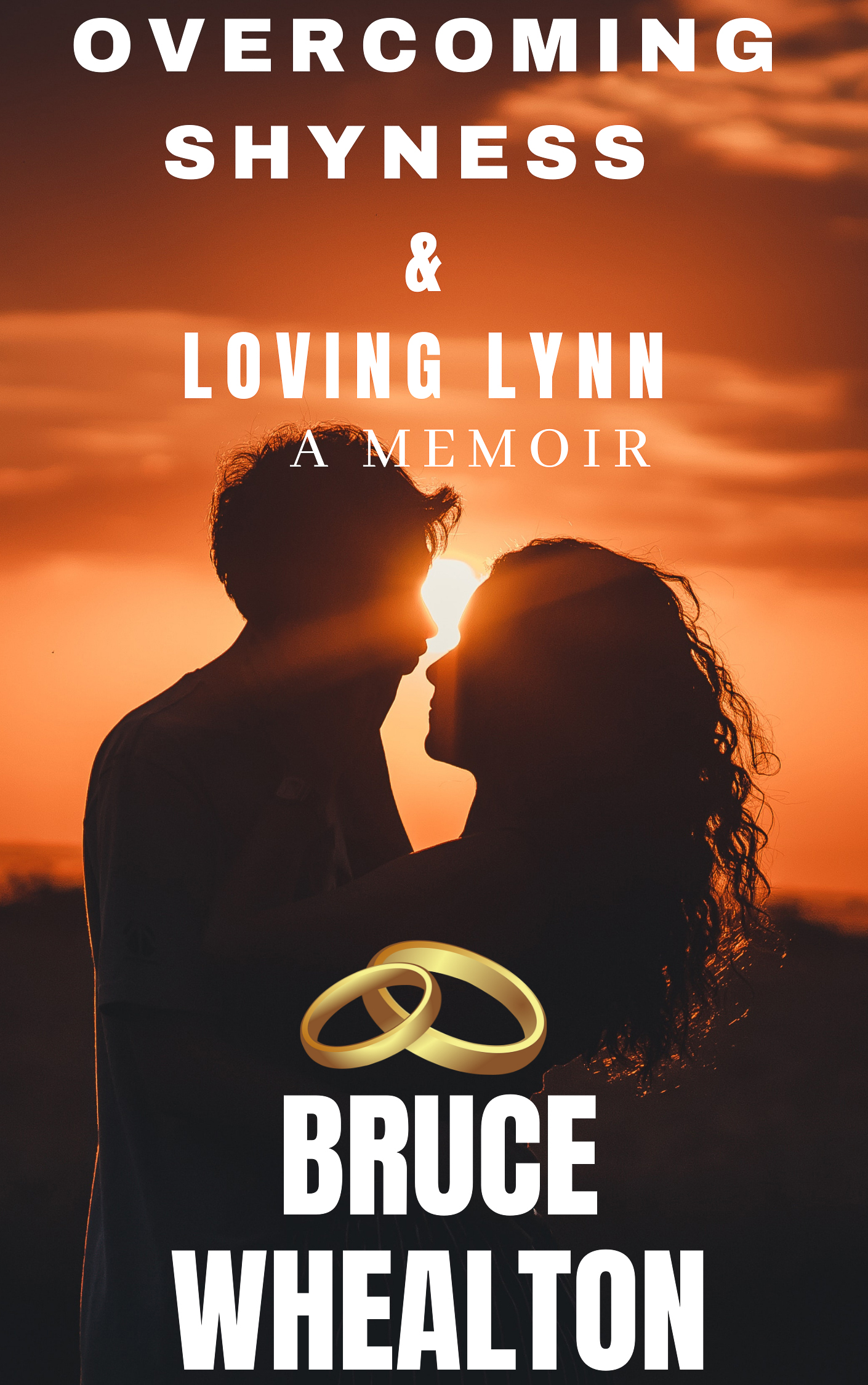
It’s amazing how much the silhouette in the photo that I found to include with this chapter of the book looks just like Lynn.


But before I share the story of our engagement, I want to go back to a moment that perfectly captures the spirit of who we were—a couple rooted in poetry, playfulness, and a love so deep it sometimes caught us both by surprise.


I had written a poem for her. That wasn’t unusual—I often wrote love poems—but this one was different. It had a dreamlike quality, inspired by both the Song of Songs from the Old Testament and a psychedelic 60s song by The Electric Prunes called “I Had Too Much To Dream (Last Night).”


We were at one of our usual Sunday night poetry readings at the Coastline Convention Center. It was late May 1994, nearly two years since we started seeing each other. The sun had sunk low, casting the room in golden dimness. Dusty, our beloved emcee, had turned on the soft lamp at the podium. It felt intimate, almost sacred.


I got up to read, not telling Lynn in advance what I was about to share. I wanted it to be a surprise. A public declaration of love.


Here’s what I read:

Dreamlike Visions

In this dreamlike vision
I lay in her lap,
while her golden hair
flows in the gentle wind,
on the beach.


Is this real?
I reach up to touch her
but she is gone... gone... gone
and I am laying on the sand.


Looking skyward I see her
in a vision.
She searches for me,
calling my name, saying,
"I am his and he is mine."


I try to get back
to find her
and that infinite beach
where we would walk hand-in-hand
or lay on the sand
holding each other
together
forever.


The vision –
the dream –
(incomplete)
the love
never ends...

the dream never
ends.


Even now, those words move something in me. At the time, I was still a Christian. Lynn was agnostic but open to the supernatural. I, on the other hand, have since become an atheist—one who still aches to believe. Back then, I wrote from that place of yearning and wonder, of faith intermingled with desire.


The song that partly inspired the poem had lyrics full of longing, of presence that slips away with the dawn. Though it was featured in a horror film, I was drawn to its haunting beauty—the way it captured the way love can feel like a dream, so vivid and intense, you ache when it's over.


At the end of my reading, the applause washed over me like a wave. People smiled and stopped me as I walked back to my seat. It was obvious what and who the poem was about.


But then came one of the most human, hilarious moments of that night.


I sat down next to Lynn, proud and quietly emotional. One of our mutual friends leaned over to compliment the poem. I turned to Lynn and whispered, “Well? What did you think?”


She looked at me, a bit startled. “What?”


“I mean... the poem.”


“Oh,” she said, her cheeks beginning to flush. “I wasn’t listening. I thought you were just reading something I’d already heard.”

There was a pause. I just smiled, shook my head.


“I’m so sorry, sweetie,” she added quickly, clearly embarrassed. “Let me read it now.”


I handed it to her. As she looked down, I leaned in, gently placing my hands on either side of her face, our lips meeting in a quiet kiss—slow, affectionate, full of amusement and intimacy. There were others around, so we kept it brief. But it said everything.


“It’s okay,” I said softly. “You know I really love you.”


“I love you too, honey,” she replied, eyes still smiling.


She read the poem then. Really read it.


And from that moment forward, it became a kind of inside joke between us. I’d tease her, saying things like, “If I ever pour my heart into a love poem, I hope Lynn’s listening.”


She’d laugh. And in time, she made it more than right. On nights when she hadn’t brought something of her own to read, she would ask me if I had that poem. And then she would read my poem—our poem—at the mic. I lost track of how many times that happened.


There was something magical in that gesture. She made my words her own. She carried them, shared them, honored them.

Just like she did with my love.


We didn’t plan a wedding at the same time we planned to get engaged—though of course, it was implied. Those details could wait. For now, it was about the promise. The meaning. The declaration that we were choosing each other, not just in feeling, but in the form of a ring.


We talked about what it meant to be engaged. For us, it wasn’t a performance. It was a lifetime commitment to live as husband and wife. It felt natural. It felt right. And yet, it also felt astonishing.


Words like amazing and wonderful get used so much they almost lose their meaning. But not here. Let me tell you what actually happened.


We went to the mall to look for a ring. Lynn was practical, as always. She reminded me we didn’t need anything flashy. We weren’t rich. A big diamond didn’t matter. “About two hundred dollars,” she said, matter-of-factly - it was her practicality that mattered. Since this was about us, we were going to be dealing with shared finances. So, I had to do what she knew to be what we could afford.


Still, I was nervous. Butterflies-in-my-stomach nervous. My heart was racing. I kept thinking, This is real. This is happening. I’m not dreaming.


They measured her finger. She chose the ring.


“Are you sure?” I asked, my voice catching a bit.


“Yes,” she said, turning to the salesperson with a smile. “Let’s get this one.”


The woman nodded. “Your fiancé can pick it up on Monday.”


Your fiancé. That was the first time I heard it out loud.


Monday came, and it felt strangely ordinary.


I arrived at her place on Wrightsville Beach with the small bag in hand. Lynn was upstairs.


She entered the room just as I was reaching into the bag.


“I want to…” I began, lifting the box, ready to open it. But I froze at what I was seeing.


Her eyes welled up with tears before I could finish the sentence.


She knew I was bringing the ring—she’d heard the woman at the store say, “your fiancé can pick it up on Monday.” But the emotion on her face—it wasn’t expected. It wasn’t rehearsed. It stopped me cold.


I didn’t finish the sentence. I couldn’t. I just looked at her. I held the box in one hand and reached toward her with the other.

We moved together like magnets. Her arms wrapped around my neck, her cheek pressed to mine, her whole body trembling slightly as her tears touched my skin.


I whispered, “Do you want to put it on?”


She nodded, still speechless.


I slipped the ring onto her finger. And for a second, we just stood there.


Then she kissed me—deeply, hungrily. Her hands cupped my face. Mine moved around her waist. We didn’t speak—not right away.


There was only the heat of her body pressed against mine, her tears mingling with our breath, her legs wrapping around me as I lowered us gently onto the bed.


My arm slid under her shoulders. Her heart was racing. So was mine.


“I’m in love,” I whispered.


“I love you so much,” she said, her voice thick with emotion.


It was—without question—the most joy I have ever felt. Not because she said yes. But because she showed me something deeper: that I could bring her such joy.


My legs went weak.


I lifted her slightly, cradled her, and let us both fall back onto the bed. Her body melted into mine. My arm slipped around her shoulders, hers wrapped tight around my back.


Her heartbeat was loud against my chest. Her lips pressed harder to mine. I could feel the dampness of her tears on my cheek, her breath against my skin, the way our bodies moved together—like music, like ritual.


“I’m in love,” I said again, more to myself than to her.


“I love you so much,” she repeated, as if it needed no further explanation.


Nothing in my life has ever come close to the joy I felt in that moment. I had made someone that happy. Her. Lynn. The love of my life. And her joy was so pure and obvious.


She kissed me again—this time with hunger, with urgency. Like she had waited her whole life for this moment and didn’t want it to end. Her fingers gripped my back, my shoulders, my face, like she was trying to anchor herself to something solid, something real.


Later, we sat on the back porch above her kitchen—half a floor up from the surf and sand of Wrightsville Beach. She was on the phone with her mom, Diane.


I barely heard the conversation. My eyes were fixed on her, the light catching her hair, the ring glinting on her finger. And in that quiet, I just sat there, overflowing with awe.


That was the moment. Not the ring. Not the kiss. Not even the words.


I had not known that love could be so amazing and such a powerful experience.


It was the knowing. The knowing that we were building a life together—one full of creativity, practicality, tenderness, and shared dreams.


This wasn’t fantasy. This was commitment. Real. Mutual. And even now, all these years later, that moment still feels like the best single moment in my life.

Section Four: Becoming a Family

This section of the book is about the life Lynn and I built together in Wilmington, North Carolina—not in some idealized, picture-perfect sense, but in the daily, soulful way that love takes root. We were a family. That’s what mattered most.


Lynn was a poet and a potter. I was on my way to becoming a psychotherapist. We met through poetry—through words that tried to make sense of the world—and found ourselves surrounded by a creative, passionate community. The artists she knew through pottery, the poets I met at the Coastline readings—they became our extended circle. But she was my home.


We dreamed out loud together. Lynn wanted to pursue a Master of Fine Arts in poetry. I was preparing for graduate school in the mental health field. We supported each other, not just practically, but with awe and belief in each other's potential.


And we got engaged—not to prove something, but to honor what already was. We were building a life together. Like any two people in love, we wanted a future shaped by shared joy, comfort, creativity, and care.