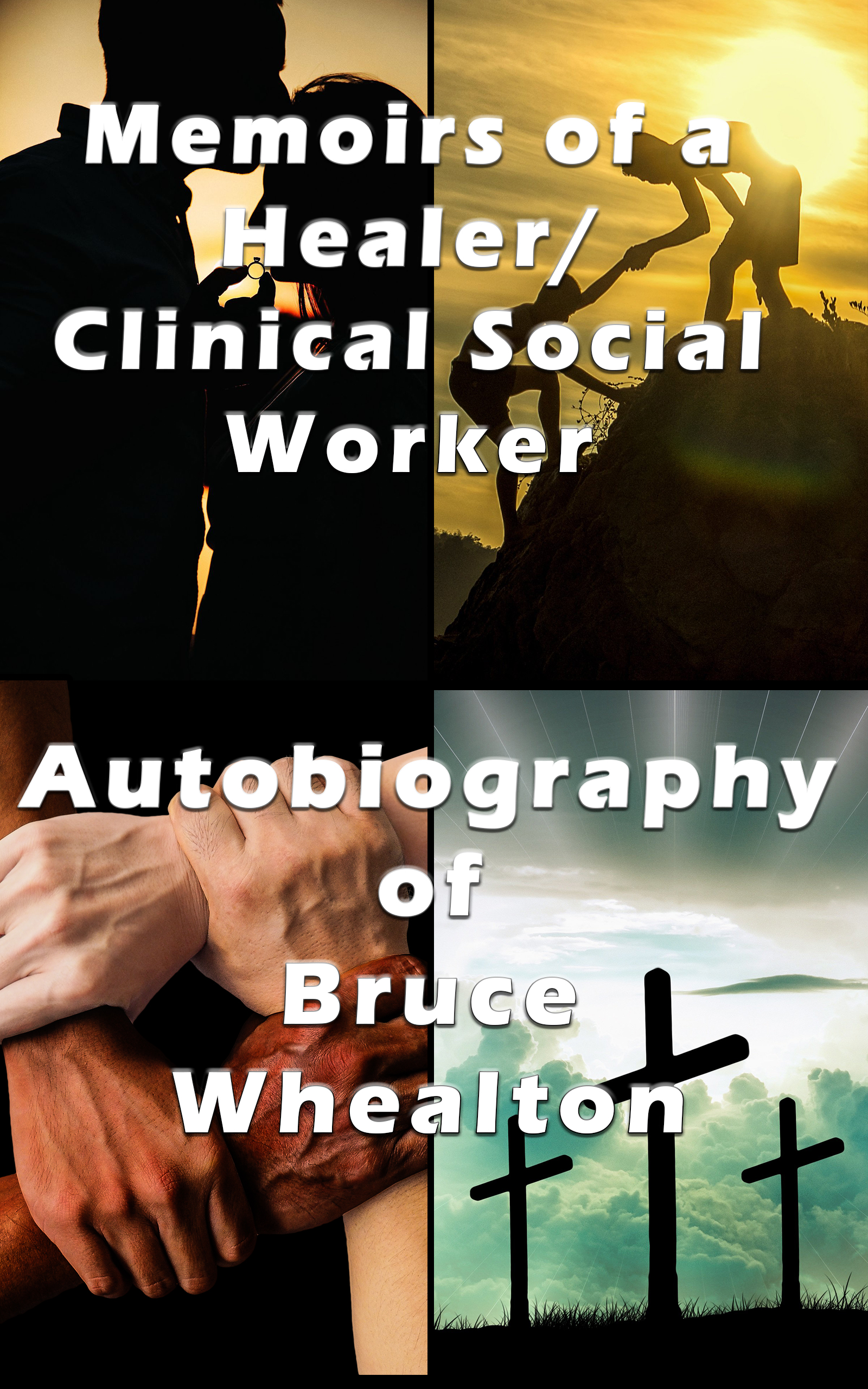
autobiography
Primary tabs
A New Chapter Begins: Tell Me I Am Not Invisible Now Taking Shape!
I’m honored to share that my newest memoir,
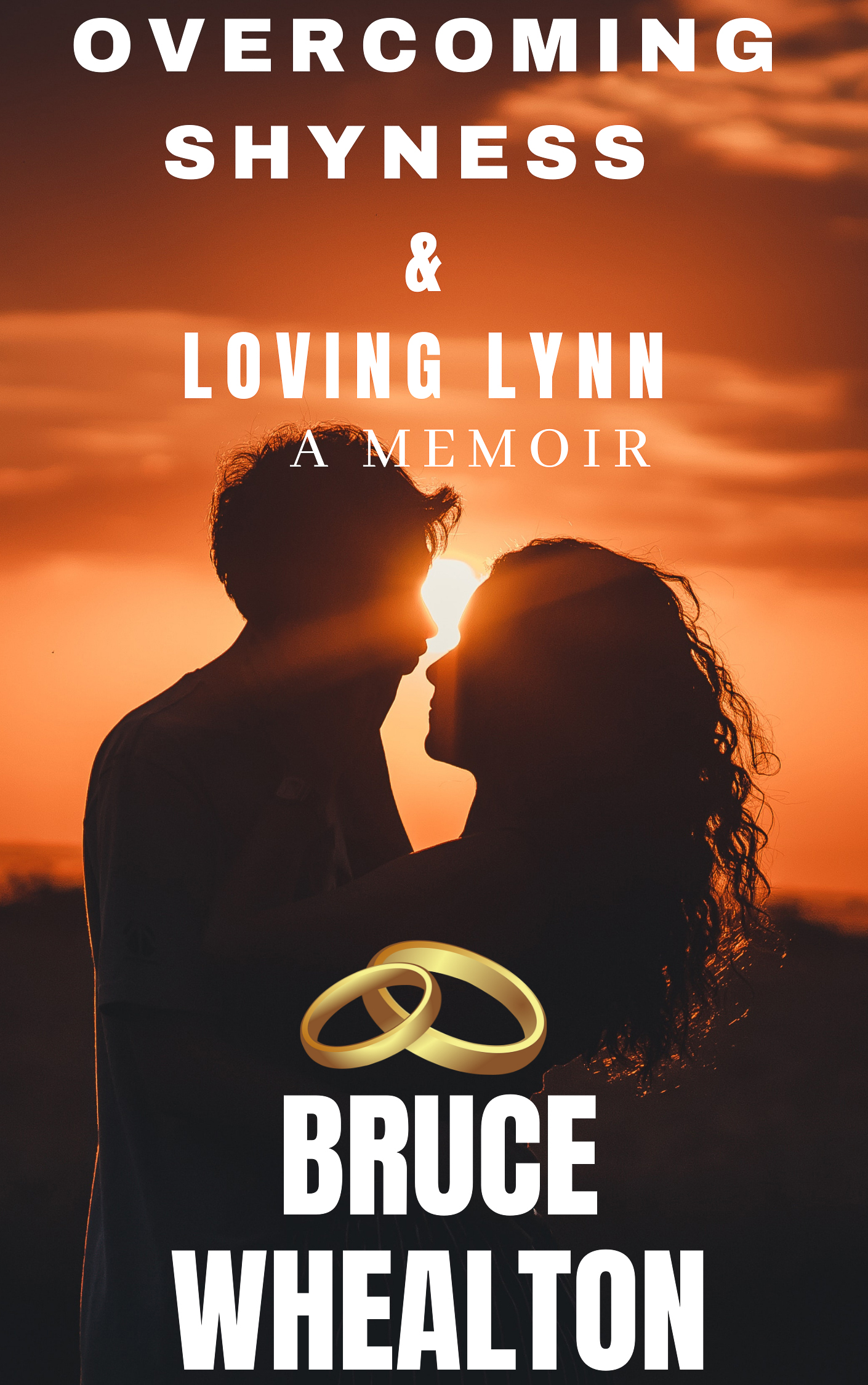
Tell Me I Am Not Invisible: A Memoir of Love, Loss, and Learning to Live Again,
is now unfolding live on my website.
The book is told in two parts.
Part I is the story of becoming — a journey of emerging from emotional deprivation and shame to discover love, creativity, and purpose.
Part II, still being finalized, will explore the heartbreak of loss, trauma, and the long road to healing.
Chapter 33: When Two Become One Body - Love, Beauty & Serenity
It was April 15, 2000. I had a few books stacked beside the bed—reading material that reflected the many states of mind I moved through in a week: psychodynamic theory, ego state therapy, even a book written by a woman with dissociative identities using collages and magazine cutouts to represent the parts of herself.
I had been reflecting on all of it—how we carry different selves inside us, how trauma and healing play out over time—when Lynn appeared at the doorway.
She had that mischievous smile I loved.
“I want sex,” she said, straightforward as ever.
My heart lifted. “Me too.”
We undressed quickly, comfortably. Familiar, yet new each time. The kind of comfort and chemistry that only deep love can produce. When she moved toward the bed, her gaze locked with mine, I felt the same awe I always did. Like seeing her again for the first time.
She climbed on top of me, our lips finding each other fast, hungry. Her body pressed close, arms wrapped tightly around me, the space between us seeming to vanish.
“I feel like I can’t get close enough,” she breathed, her mouth pressing into mine like she was trying to merge with me—hungry, urgent, needing more than just touch.
“I know,” I said, pulling her even closer.
She shifted, her breath catching as our bodies moved together. Then, gently but firmly, she paused.
“You’re too close, sweetie,” she said with a soft sigh, her meaning unspoken but understood.
We had talked about it before—her health, the impossibility of pregnancy due to her condition. It was the one boundary we couldn’t cross, no matter how much we wanted to become one in every way.
But still, we held each other. Moved together. Loved each other as fully as two people can.
The intensity built. She clung to me, her body not arching but wrapping itself around mine—like she was trying to become part of me. Our mouths met again and again, hungry, urgent, like we could dissolve into each other if we just held tight enough.
And then—suddenly—I let go.
She felt it. Paused. Still. A quiet smile crossing her face.
There was silence, the kind that only happens when two people have given something wordless to each other.
She whispered, “We should shower.”
I caught my breath. “But you…”
She looked at me, her eyes soft. “I'm happy,” she said. “It’s okay.”
I was confused a bit and wanted more for her.
This was about connection. About wanting and being wanted. About love so deep that it didn’t need to be measured. It amazed me that this kind of passion was still happening nearly every day - like we were newlyweds. Yet, we were years into the life as husband and wife. It didn’t feel routine. It felt alive. Urgent. Sacred.
Afterward, she went to start the shower while I stayed in bed, a wave of serenity washing over me.
We were in love—because she was in love with me. Because I was in love with her. Because we had become, in so many ways, one.
“I love you,” she said as we stepped into the water together.
“I love you so much,” I replied, heart full.
Then I laughed softly.
“What?” she asked.
“I was just thinking of that song by The Moody Blues—the way the singer repeats those lines like he’s overcome, like he just can’t hold it in.”
I spoke the words that the singer in the song sang:
'Cause I love you,
yes, I love you,
oh, how I love you,
oh, how I love you…'
“That’s how I feel,” I told her. “I want to tell the whole world that I love Lynn.”
She smiled, the way she always did when she knew I meant every word.
And I did. I would have shouted it from rooftops. Not just after making love, but anytime. Every day.
That night, as I lay beside her, I started thinking about her dreams. About how much I wanted her happiness. She had talked about getting her Master of Fine Arts one day. Maybe I could help with that. Maybe I could buy her a kiln so she could fire her pottery at home. Maybe, with this practice I was building, I could give her more than just love. I could give her the things that filled her dreams.
I was in love. Not just based on the passion we shared but the peace and serenity that matched our connection together.
Chapter 32: Career Success—Helping Others, Becoming Whole
After graduating in 1996, I had officially become a therapist. But that alone wasn’t the milestone. The deeper truth is this: I was now helping others with the very issues that once defined me.
I began my post-graduate career at Brynn Marr Psychiatric Hospital, then worked briefly at two public mental health agencies. And while each role had moments of meaning—particularly the work I did directly with clients—it became clear that the settings themselves didn’t always align with my values. Bureaucracy, insurance limitations, and profit motives left little room for the kind of deep, relational work that had drawn me to this field in the first place.
So, I made a leap that once would have seemed impossible: I started a private psychotherapy practice.
Chris Hauge—my longtime mentor—was instrumental in helping me take that step. He offered his office space when he began scaling back toward retirement, allowing me to rent the space affordably by the hour. With his guidance, I took the necessary steps to get credentialed with insurance providers, set up billing systems, and advertise my services to the community.
And people came.
I began seeing clients for anxiety, depression, eating disorders, and relationship struggles. One client paid out of pocket for help with weight loss. Another came to me with questions about communication in his same-sex relationship, wondering whether I’d be comfortable hearing about the details. I was. More than comfortable—I was honored. People were trusting me with their most vulnerable truths. And they were doing so because they could feel that I understood.
Because I did.
What once had been sources of shame—my social phobia, my dating inexperience, my fear of being seen—had now become bridges. Not liabilities. Strengths. I had done the work, and I was continuing to do it. I was in therapy myself, pursuing a form of psychodynamic work rooted in self-awareness, free association, and emotional insight. I didn’t want my past to distort the present—not mine, and certainly not my clients’.
The therapy I offered wasn’t perfect, but it was real. And it mattered.
As my caseload grew, I outgrew the shared office arrangement and moved into my own space. I was fully self-employed, fully licensed, and finally—fully believing in my own capacity to help others heal.
Lynn and I went out to celebrate. It wasn’t just a milestone in my career—it was a moment of quiet triumph. Not flashy. Not loud. Just the two of us, sharing a meal, holding hands across the table, knowing how far we had come.
So much had changed since the days when I thought I had nothing to offer.
Now, I was a therapist with a thriving practice, a deep belief in human healing, and a partner who believed in me even before I did.
And maybe, in helping others become whole, I was continuing to see my value to others.
Preparing an Office for Therapy - A Space of My Own
My private practice had grown faster than I could have imagined. At first, I was renting space by the hour from Chris Hauge—my mentor and supporter—but within a few short months, I was seeing clients nearly full-time. It no longer made sense to rent by the hour. The numbers told the story: I had reached a point where a dedicated space wasn’t just a dream—it was the next step.
With Lynn’s support, I found an office in downtown Wilmington, on Chestnut Street. The rent was $400 a month, which was far less than what I would be paying if I continued renting hourly. Within a month, I had already passed that threshold—and we both knew it was time.
The space was exactly what I needed. It was part of a long hallway of offices in a building shared with other professionals, including a lawyer and a few other therapists. It came with a receptionist, a quiet waiting room, and access to a shared conference room I could book when needed.
Lynn and I jumped right into setting it up. We scoured yard sales for a comfortable couch, picked up pillows to make the space inviting, and bought a desk and chair from Office Depot. It was a whirlwind of practical and emotional preparation. I had never cared much about how things looked, but Lynn did—and thanks to her, the space felt warm, welcoming, and professional. Without her help, I would have been self-conscious, worrying if the space felt right for my clients.
We added a whiteboard for diagrams and notes. I framed my degree, licensure, and hypnosis certification. These weren’t just decorations—they were symbols of a journey that had once felt out of reach. From a young man too anxious to speak in class, I had become someone clients sought out for healing and support.
We also prepared for the full range of needs. I added chairs for potential group sessions and stocked a small toy box for play therapy with children. I didn’t expect a large number of child clients, but I wanted to be ready. I remembered how lost I’d felt during my first internship with kids—and I had since studied play therapy with more intention.
The receptionist was helpful with greeting clients, answering the phone, and handling basic tasks during regular business hours. I kept the more personal aspects—like therapy notes, billing conversations, and scheduling—between me and my clients to maintain confidentiality and control. After hours, I had a key and alarm code, and I often stayed late to see clients who couldn’t come during the day.
And then, suddenly, I was here: practicing full-time in my own space. Not as a student, not as a paraprofessional, not as someone tagging along on someone else’s license.
I was the therapist. The space was mine.
It’s hard to describe what that felt like. Euphoric. Surreal. Joyful. And above all, deeply earned.
Lynn and I celebrated the way we often did: with a quiet dinner out, holding hands across the table, hearts full. I felt like I wanted to hang a metaphorical plaque on the wall of my life—“Here. Here is where it all became real.”
Not long before, I could barely imagine a life like this. Now I was living it.
And it was beautiful.
Chapter 31: Career Success! Building A Psychotherapy Private Practice
In the last chapter, I mentioned being employed at Brynn Marr Psychiatric Hospital. While the work with clients was rewarding, the values and norms of the setting were not a good match. I then worked in two public mental health settings. The second one was Sampson County Mental Health Center. That lasted just about 9 months before I wanted to move into private practice.
I was able to complete all the requirements for licensure as a Licensed Clinical Social Worker (LCSW) within the state of North Carolina before I left my employment at Sampson County Mental Health Center.
It was clear that whatever problems I had on the jobs at this agency or at Brynn Marr Psychiatric Hospital had nothing to do with how I performed with clients or patients.
During this time, I had sought feedback, counseling, support, and guidance from my colleagues. I had joined the local chapter of the Society for Clinical Social Workers which had regular meetings where I could interact with colleagues in a congenial setting where we got to share our ideas, request feedback on casework, and learn from one another.
It is through these meetings that I kept in touch with Chris Hauge who was a mentor of mine as I have mentioned previously.
I had approached Chris seeking advice on entering private practice because I looked up to him... I had known that he had kept a private practice for some time. He had been very supportive of my goals as they related to making a positive difference in the lives of others.
The Keys to Success and Accomplishments
As it turned out, Chris said that he was considering retirement and that he was cutting back his office hours. He offered to let me rent his office space at a certain rate per hour if and when I used the office. This was a very affordable way for me to find success.
I believe it was about $15 per hour - Chris wasn't using the office anyway during these hours. He told me the hours in which he used the office and when the office would be available. He shared an office with a partner - they had the main waiting room and reception area and two private office rooms where providers, like myself, could meet with clients.
If I had to build a private practice on my own, it could be challenging to get started. I would need to build a base of clients that would be paying every week for treatment with me. If you rent an office full time you have access to the building any time, day or night, but you pay a monthly rate to do this.
The cost to rent an office every month would be higher than the costs that Lynn and I were paying to rent our home - though her mother had been renting it to us and therefore we had gotten a great deal, a cheap rate for renting a home.
Chris gave me a key, introduced me to his partner and we discussed how I would record the hours in which I was going to use the office. He had a schedule I could consult to find out when the office was available.
There are so many things to consider when you are pursuing a career in this field and when you are seeking to work in private practice. As noted, I had to consider Professional Liability Insurance also called malpractice insurance, which are different names for the same thing. Chris needed to know that I had this coverage.
Billing is another issue. I had to file insurance claims for treatment with a client's insurance company or agency. So, I had to get registered with various insurance companies including Medicare.
I had contracted with someone to do the medical billing as well and I got a post office box (PO Box) for non-personal mail.
Having all my mail go to Chris' office didn't seem like something that I wanted to do yet. If I did not go to the office because I didn't have a client that day, then I might miss my mail that day. There was a place where I could get a PO Box close to our home.
It's great to have someone with whom you can consult when you are doing all these things and Chris was helpful in this regard as well.
Then I had to advertise in the newspaper and online. The internet was still a bit new in the late 90s, but I was able to create a website.
Other Advice That I Received from Colleagues
It's important to reflect upon the support I got from colleagues as well as the therapy or treatment that I had been receiving.
I became interested or curious to learn something about psychoanalysis and I began to study this formally from an organization that provides certification in psychodynamic/psychoanalytic therapy. The organization provided learning objectives, credits, coursework, as well as certifications for mental health and psychological professionals.
I would go and see Marjorie Israel, who worked out of her home. She was a clinical social worker like myself and I met her at those meetings.
Marjorie invited me to her home office. It was an interesting and scenic location. She had a nice yard with flowers and plants in a beautiful and serene garden with a curving sidewalk.
I would lay back on her couch and do free association or recount my dreams. It was reminiscent of Freudian psychoanalysis with the psychoanalyst and the couch. Marjorie said that she had to modify her approach since psychoanalysis traditionally had been done with a client coming four or five days a week for years.
Oh, I was paying her out of pocket, also. Lynn and I didn't have a great deal of money but she was supportive of me getting the guidance and support that I needed.
She also engaged in more talking than traditional psychoanalysis.
While so much of psychoanalytic theory is hard to prove with research, I was interested in a technique where I would not be censoring anything at all. I was interested in making sure that I covered everything going through my mind – my motivations and hidden desires. I didn't want any issues from my past to interfere with my role as a therapist for clients.
It is so special that Lynn didn't ask me to work for a big agency that might offer "good insurance." We both knew that insurance wasn't the answer. She was born with a pre-existing condition. Even forcing insurance companies to cover pre-existing conditions is not a guarantee that we would need.
Starting My Practice
One of my counselors cautioned me that Wilmington was a saturated market, meaning there probably isn't a market for another psychotherapist in the Wilmington area.
I was going to prove him wrong, which would make him happy actually. I mean, he had my best interests in mind. He was speaking only about the market for therapists.
I did start to pick up clients rather fast. I had selected a few words to use in the advertisements as specialization areas that I hoped would be problems that people in the area had and/or things that interested me. So, initially, I thought of advertising that I could help individuals who are dealing with anxiety, depression, eating disorders, and relationship issues.
I had previously had problems with relationships which was manifested in the form of shyness, social anxiety, and social phobia.
I added that I could use hypnosis to help with quitting smoking, weight loss, or other problems.
This seemed to work out well for me. I used a second phone number that rang at my home, but the location of where I was living was not revealed.
One guy started paying me out of pocket for weight loss.
Then I picked up a client who had relationship issues. He said that he was gay and asked if I could help. I reported that I could help. To me, relationships require active listening. So, I would demonstrate that in the sessions with the client and help him to learn how to increase his communication skills in the same way.
It's interesting that people in relationships that are non-traditional relationships will understandably want to know if we (the therapists) are comfortable listening to details about their intimate relationships.
Returning to the topic of psychoanalysis, we get terms like transference and countertransference from this field.
Transference is about how the client reacts to or responds to the therapist. It can relate to projection where a client projects onto the therapist ideas and feelings that exist in another relationship.
Countertransference is how therapists respond to the client and the client's behaviors. I was working on my own "issues" to ensure that none of my past was carried into the therapy sessions with others and would cloud my judgment. This was part of why I went for analysis with Marjorie.
Anyway, I also picked up a client who was dealing with major depression. Another issue that I was treating was anorexia. I had taken on a client who was in college and had come home with her family hoping to return to college later.
My client base was growing, and it was getting to the point that I needed more access to the office than what was available while renting from Chris. I also found that by paying a flat rate every month, I could save money.
Recognizing these accomplishments was amazing and a cause for celebration. So, Lynn and I went out to dinner at one of our favorite restaurants. Everything was amazing and a celebration was called for!
This has been an overview of the various types of clients I was seeing and the problems or issues I was treating. Later chapters will go into more detail so I will ask you to keep reading with me.
First, let's talk about family life so that you, dear reader, will know that I had another life outside the office.
Chapter 30: Becoming a Therapist, Becoming Myself
Graduating in May 1996 with my Master’s in Social Work should have been the climax of a long journey. But in truth, it felt more like a beginning. The real transformation—becoming a therapist, becoming myself—was just taking shape.
I accepted a position as a therapist at Brynn Marr Psychiatric Hospital, a locked inpatient facility in Jacksonville, North Carolina, not far from Camp Lejeune. It felt like a natural next step after my internship at The Oaks. I was no longer an intern. I was the therapist—one of two on the adult unit, responsible for half the patients under my care.
Leading therapy groups was a routine part of the job, and I accepted that without hesitation during the interview. The person who NEVER spoke in small classrooms at Georgia Tech was now agreeing to fascilitate therapy groups. But now? It felt like a culmination. Beginning four years ago, I had stood at open mics reading poetry to strangers, declaring my love for Lynn. Now, I was standing in hospital rooms, holding space for pain, for hope, for change. All eyes were on me. Whether the patients thought the group therapy would help was less important than the importance I placed upon my role.
Group therapy sessions happened multiple times a week. Patients could also request individual sessions. And they did. Often. That meant the world to me—not because I had the answers, but because people felt safe with me. I was no longer the shy, unsure young man who avoided eye contact. I was a therapist, and I was showing up for people in ways I once thought impossible.
And I never forgot that I didn’t get here alone.
Lynn’s support wasn’t just moral—it was foundational. She had walked beside me through my transition from engineering to social work, believing in me before I fully believed in myself. Every step of my success was built on the foundation of her steady love.
Not everything about the job was ideal. Brynn Marr was a for-profit hospital, and it quickly became clear that treatment was often dictated by reimbursement policies. One patient, Victoria—a woman with anorexia and suspected Borderline Personality Disorder - quickly exhausted her covered Medicare days. My supervisor wanted to discharge her, but in the mean time, waiting for a new placement, she would continue to see me for therapy. Not the other therapist. Me.
I couldn’t turn her away. She needed care, not just a referral. And when it became clear that the unit was becoming a hostile environment for her, and when my supervisor asked me, I told him: “Yes, I think this is a hostile and non-therapeutic environment for her.”
When she was confronted by multiple staff, I made sure to be at her side. Not to rescue her, but to stand beside her. To be someone consistent. Someone who didn’t flinch.
That’s what therapy often is—just staying with someone in the hard moments.
She was volatile at times, and the term “borderline” was thrown around like an insult. But I never stopped seeing her as a full person. She might storm out one day and return the next like nothing happened. That was okay. I stayed steady. And when she was told she had to attend therapy groups which were conducted by either me or the other therapist on the unit, Victoria stated emphatically, “Fine, I’ll go to Bruce’s groups and that’s it.” The other therapist was a woman with maybe 2 or 3 year’s experience.
One afternoon, that trust was still unfolding—Victoria and I were in session when the phone rang at my desk. The storm outside had intensified. Hurricane Fran was aimed with the eye of the storm coming right up the Cape Fear river where we lived in Wilmington.
It was Lynn.
“What are you doing?” she asked—not panicked, not pleading, but with that firm, unmistakable tone she used when something mattered.
“I’m working,” I said, as if that explained everything.
“You need to come home now!” she said, emphatically “The roads are flooding.”
There wasn’t time for her to explain anything else about her worries about me arriving home safely or her being alone. I couldn’t believe that some aspect of the indifference I had known growing up from my parents had influenced this entirely different relationship. She might have been firm but it was out of love and not convenience for her.
Her voice carried what my parents never did. When I was 18, about to go to college, my father told me to get rid of the fort built when I was a younger kid. The only reason it was still there when I was older was as another place to hide or a temporary home for my friend Paul. I had the crazy idea that I could just burn it down. So, in the middle of the summer, in the evening as darkness arrived, my friend Ken and I decided to burn it down. Talk about reckless and crazy! There was a propane heater inside with tanks of propane in there. Two of them had shot up like rockets missing Ken who was on the top dropping water that I brought from the stream.
There was something different about this memory. I had lost hope that I could put the fire out. I ran up to tell my father to call the firestation. He said “no,” probaby thinking about how I could get in trouble. He didn’t confront me for having the irrational idea of burning it down. On the one hand he might have been concerned about me getting in trouble but I had only known indifference from my mother and father. Without taking time to explain more about how out of control the fire was, I rushed back into the woods behind our house to keep bringing water from the stream to put it out. It’s tragic that I had to wonder about all the tangled ideas that I had back then that came rushing back. Was he confident I could put out the fire? It’s amazing the neighbors didn’t pitch in. Was it just too much for a stoic and indifferent father to cause his son to get in trouble?
Why am I interveaving this memory into my narrative? This is one of those few times when I can only hope that the reader can infer some meaning to this.
Twelve years later with a hurricane coming at Wilmington, I realized that I mattered and I felt something entirely different when Lynn told me to come home now! My decisions and choices took on a different meaning with Lynn. There was love.
I told Lynn, “I am leaving now.” And I added, softly and with tenderness, “I’m sorry.” And I meant it.
I turned to Victoria and said in a hurried tone, “I have to go home.” She had put two and two together in this rare instance of a therapy session being interrupted.
I left the hospital and drove through streets that were fast becoming rivers. Water rose up to the hood of my car. It was pure luck that I made it back without getting stranded. But love—not luck—is what got me to leave.
That was the moment I saw something I hadn’t fully understood until then.
This wasn’t just a job I’d chosen. This wasn’t just a career I had trained for. It was a life I was building. And someone was waiting for me in that life—not out of obligation, but out of love.
She was home, alone, afraid. And she needed me. Not just safe. With her.
I’d never known that kind of need before - not from my parents, not from anyone. But I knew it now.
And I wasn’t going to take it for granted.
Chapter 25: My Other Family – Holding On to Lynn
By the summer of our second year together, I can remember standing on a porch during one of Lynn’s pottery events. I didn’t know anyone else there. I felt a little out of place—but not alone. It was summer.
We walked in hand-in-hand.
Later, feeling a bit awkward I found a seat at a picnic table. Lynn right near me. I reached for her arm and whispered, “Sit on my lap,” guiding her gently as she sat my lap and turned to face a friend talking. There was a pause in her conversation as her acquaintance drifted away. My eyes were suddenly captivated by the shape of her leg revealed by her very short shorts - probably not even trying to be seductive… and her foot with a open sandle dangling there.
My thoughts were playful and seductive. My hand ran up her leg and kept moving, as if no one was watching. She just turned to grin at me. Not telling me to stop, just knowing we were in public and we understood that.
Her body against mine was familiar by now, and this was one of those moments when desire mingled seamlessly with peace. She turned to me and asked sweetly, “Are you doing okay, sweetie?”
My hand had stopped but still was on her leg. My answer was “Oh, yeah, I’m good.” She understood and smiled knowingly.
This wasn’t the only moment of sexual playfulness nor was I the one acting. Even while I was driving… well that’s a private matter… or was it? The memory. I was driving and whether or not a person higher up in a truck might see didn’t seem to change Lynn’s actions or desires to pleasure me… and not needing to ask permission. It would be like asking for consent to tickle a person - the non-predictable nature of the action makes it work.
Later, we visited my parents for Christmas. It seemed natual to do. I was clearly not comfortable with this despite choosing to visit. Part of me wanted to show them the beautiful and loving lady that I had, as if they cared. Another part of me wanted to show what love looked like.
It was about being close as a natural thing, not like newly we were newly weds but we were just close to one another. Being in their home made me nervous. I saw Lynn speaking to my mother and got up close… I wrapped my arms around Lynn. It said “I’m with her and not you.” It also said to Lynn, “I need you.”
Intimacy as Discovery, Not Performance
I had studied Masters and Johnson. I had worked with clients who described their sex lives in clinical detail. I knew the theories about compatibility, erogenous zones, dysfunction, technique. But nothing in those textbooks prepared me for what it meant to discover someone’s body through love—not judgment, not comparison.
Lynn and I weren’t performing for each other. We were exploring. We weren’t trying to “get it right.” We were figuring out what felt good—what was comfortable, what was sacred. There was no pressure to be experienced or skilled. There was only curiosity, trust, tenderness.
I never expected oral sex, and she didn’t either. Perhaps that was because of my queasiness about mucus, a recurring challenge due to her illness. I once admitted to her that I struggled with things like sputum samples. She understood. She never made me feel ashamed of that discomfort. And in return, we both created a space where no part of each other was taboo—even if there were boundaries.
We explored everything else. Joyfully. Lovingly. Respectfully.
And as time went on, we knew what we liked, what to ask for, and how to listen to each other’s bodies without shame.
The Sacredness of Sex
For me, sex with Lynn was never casual. It was sacramental. I was still a Christian at the time, and I believed deeply in the idea of two becoming one. Our bodies were our offerings. Our souls met in that intimacy—not in spite of her illness, but in full knowledge of it.
And yes, I was a romantic. But this wasn’t just romance. This was a spiritual union. And when we were wrapped together, as one body; I felt more connected to the divine than I ever had inside a church.
It’s true—some people confuse physical pleasure with love. But we weren’t confused. We were making love. And we did so not as an obligation, or a performance, but as a celebration of everything we were to each other.
If I’m honest, I was learning to be free in my body by loving hers. I wasn’t trying to impress her. I was just trying to love her as fully as I could. And she gave me the safety to do that.
That was the miracle.
Not the sex. Not the affection. But the safety. The shared knowing.
I had never known that before.
And I have never known it since.
Chapter 22: Building a Home, Weathering the Small Storms
The life I had with Lynn felt like the culmination of a lifelong dream. I had a career that was beginning to take shape, but more than that—I had a partner. A family. Even though we couldn’t have children, we were a family. That truth carried weight and meaning.
From the outside, some might have seen our relationship through a distorted lens. But it was the ability to argue, to disagree—and to talk about anything—that made our connection so strong. I don’t remember my parents ever disagreeing about anything, which now seems bizarre to me. It was like they were afraid to have different opinions. That kind of silence doesn’t feel like peace; it feels like avoidance.
My friend Jean, years later, once remarked on how much Lynn and I argued. But he only ever saw the tension—not the tenderness that followed. He never saw the repair, the softness that always came after.
In fact, in one moment that I mentioned earlier, he missed the part where, after a disagreement, I’d handed Lynn a signed copy of his book and said, “Just because we’re fighting doesn’t mean I don’t love you.” Her face softened, and that amused, radiant smile returned—because she couldn’t stay mad.
That was us. That’s what he missed.
We never let distance fester. If Lynn was upset or hurt, I couldn’t stand it—I had to make things right. Once, in a moment of frustration, she asked, “Then why are you with me?” and I blurted out, “I don’t know.” But I caught myself instantly. “I’m so sorry,” I said, my voice clear and without any uncertainty. There were some things I knew for certain and my love for Lynn was one such absolute truth. “I’m with you because I’m in love with you.” Spoken with the solemnity that was both profoundly passionate and yet simultaneously matter of fact - a truth so undeniable as it was almost a contradiction that passion could co-exist with simplistic truth.
Some of our arguments came from the tangled roots of my religious upbringing—beliefs I’d inherited but never questioned. Absolutes I mistook for truth. But Lynn was patient. We didn’t avoid hard conversations. We challenged each other, disagreed out loud, and always found our way back. Our arguments weren’t threats to our love; they were part of how we strengthened it.
Our Home
Our home was a space that reflected who we were. We adopted two cats—Tip and Boo—and Diane even installed a swinging door so they could reach the garage where their litter box was kept. We each had a car, though we parked them outside because we used the garage as a workspace. It had a treadmill, free weights, and even a punching bag that became my occasional outlet, inspired by Gestalt therapy.
We worked together to make the house our own. Diane helped us build bookshelves using stained ladders and a stud finder to anchor them into the wall. We set up a computer station and eventually had cable internet—cutting edge at the time. One room was turned into a cozy guest space for Lynn’s cousins, with a larger television. In the bedroom, we kept a smaller TV near Lynn’s nebulizer and medication equipment, often falling asleep to Star Trek.
We took turns cooking, cleaning, and organizing. Lynn, ever practical, often directed how things should be cleaned, and I was happy to follow. We both handled litter box duties when possible, though I now regret letting Lynn do it at all—it wasn’t healthy for her to be near the dust. At times, I denied the seriousness of her condition. That was something I had to grow through.
I obviously had to mow the lawn and while I didn’t see the same urgency to do this as Lynn did, I respected her desire that it be done - by me.
Serenity and Intimacy
Growing up starved for nurturance, I often craved closeness in ways I couldn’t explain. With Lynn, I found peace in the smallest gestures—resting my head in her lap, letting her caress my forehead, feeling my body finally exhale into someone else’s care.
We hadn’t had sex before we moved in together, but that changed as our life together deepened. I remember asking Lynn, somewhat shyly, to pick out something sexy for Valentine’s Day. She did, and it meant everything. Not just because it aroused me—though it did—but because it showed how deeply she saw me. It wasn’t performative. It was for us.
That’s the thing about our intimacy—it was always new, always unfolding. There was a mystery to it. We weren’t just reenacting some cultural script. We were exploring. Learning. Responding. Lynn didn’t wait for me to initiate every time. And when we didn’t know what the other wanted, we asked, or listened to each other’s bodies.
Our connection was unusually in sync. We rarely faced the awkward imbalance of one person being “in the mood” while the other wasn’t. We just responded—open, mutual, unguarded. Even a glance, a smile, could spark something between us. And it always felt right.
I’d grown up with the idea that men had to lead, that sex was a duty or an obligation. But Lynn and I had none of that. We moved together in rhythm, equal, attuned. We honored each other’s cues, joys, hesitations. And that felt like a kind of healing, too.
She sometimes slept nude, a quiet gesture of closeness and trust. Sometimes I’d hold her breast gently as we fell asleep, feeling peace and desire mix in a quiet kind of bliss. Even then, I’d check to see if she was in the mood and respect her response that might be something like “I need to sleep now, sweetie.”
She wasn’t fragile. But I needed to know I was giving her pleasure, not pain. That mattered more than anything else.
This, I think, is what love should look like. Passion and tenderness. Respect and desire. A home built not just with furniture, but with trust. And each night, a little miracle in the ordinary: we turned toward each other, and found the same warmth waiting there.
Chapter 19: A Home, A Commitment—Without a Wedding
After we got engaged, life didn’t transform overnight—but the horizon began to shift. Our conversations became more grounded, our hopes more tangible. I had moved out of the place I shared with Donna and Terri, and sometimes Lynn stayed the night with me, or I with her. We were growing closer in every way.
Even then, we weren’t “sleeping together” in the way most people would define it—not yet. That final boundary remained unspoken, uncrossed. But something had changed between us. Lynn, always attuned to me, may have sensed that I was becoming more at ease, less tangled in the old religious shame I’d carried for so long. When she removed her shirt—no longer stopping at just dropping her bra—it felt natural. Not bold, not calculated, just... right. She was honoring the space I’d opened. And in truth, the hesitation had always come from me. My toxic beliefs.
It wasn’t about a lack of desire. We had that, abundantly. It was the religious programming—those lingering voices whispering rules I no longer fully believed. And still, they haunted me.
And yet—our bodies were already speaking the truth. We held each other longer, touched with deeper intention. Every brush of skin seemed to say: this is good. This is safe. This is love. Nothing in me felt confused about those moments. I wasn’t struggling to reconcile them with morality or scripture. Instead, I found myself quietly letting go of what no longer made sense. The unspoken language between us—how far we’d go, how much we’d share—was shaped by mutual respect and gentle restraint. She knew where I stood, without my needing to say a word.
And then came Diane’s offer.
Diane—Lynn’s mother—offered us a home to rent after our engagement. That gesture was more than generous—it was symbolic. It meant we were stepping fully into a shared life, one defined by commitment and love, not by paperwork or permission. The decision to move in together wasn’t taken lightly. It was the turning point where I had to reconcile what I’d been taught with what I knew in my heart to be true. And Diane didn’t need a marriage certificate to take this step.
Until then, even during our most passionate moments, Lynn and I had kept our clothes on. I had still been holding onto the last fragments of the religious ideas I was raised with—teachings about what sex was supposed to mean. And even though Lynn never pressured me, I think we both knew those barriers weren’t really about her. They were about what still lived inside me.
But once we accepted the house—once we knew we were going to share a home—everything settled. The clarity came.
We were no longer visiting each other’s spaces or planning around separate routines. We were going to sleep in the same bed. Wake up under the same roof. Share meals, memories, bills—and a life.
And with that new home came a new level of intimacy. Not forced. Not rushed. Just… natural.
We undressed without shame. We touched without hesitation. We slept skin to skin. We made love—not because it was overdue or expected, but because it was an extension of everything we were already giving each other.
There is something sacred about being fully wanted. Not just emotionally, but physically. There is something healing in knowing that another human being longs to be close to you—not just out of desire, but from love, from a hunger to belong.
I think of newborns placed on a parent’s bare chest. That skin-to-skin contact, that grounding, that wordless affirmation: You’re here. You’re safe. You’re mine.
That’s what it felt like. That’s how natural it became. Not performance. Not shame. Just presence.
And I knew I had made peace with it. Not gradually—decisively.
I didn’t see it as “living in sin.” I saw it as something sacred. We weren’t hiding from God—we were honoring what He had given us. I believed then that if marriage was meant to be a covenant of love, fidelity, and mutual care, then we had already entered into it. The legal part had been denied to us, but the spiritual part was already real.
But not everyone saw it that way.
The Church didn’t.
When we approached the priest, hoping for a religious ceremony, he refused. Without a legal marriage license, he said, he couldn’t perform the sacrament. He knew what a legal marriage would mean—that Lynn could lose her health insurance and risk her life. And still, the answer was no.
Lynn wasn’t religious, but she was spiritual. She respected my beliefs. But I’m still stunned that I wasn’t driven away from the Church right then—by its coldness, its rigidity, its failure to act with compassion or common sense.
A sacrament, denied. Not because we lacked love. But because we wouldn’t risk her health.
And strangely, the greatest tension didn’t come from within us—it came from outside.
Especially when we visited my family.
On one trip, Lynn suggested we sleep in separate beds. I remember being shocked. Hurt, even. But she was trying to show respect for my parents. And I went along with it.
Looking back, I wish I hadn’t. I wish I had said, No. We’re a couple. If that’s not accepted, we’ll get a hotel. Or we won’t come.
It wasn’t about shame. It was about honoring the truth of our relationship.
I could have told our friends: “We’re more than engaged. We’re already married—in every way that matters.” They would have understood. No one would’ve alerted the state. There was nothing to hide.
We weren’t pretending.
We were living it. With tenderness. With intention. With love.
Even without a wedding, we were a family.
Section Four: Becoming a Family
This section of the book is about the life Lynn and I built together in Wilmington, North Carolina—not in some idealized, picture-perfect sense, but in the daily, soulful way that love takes root. We were a family. That’s what mattered most.
Lynn was a poet and a potter. I was on my way to becoming a psychotherapist. We met through poetry—through words that tried to make sense of the world—and found ourselves surrounded by a creative, passionate community. The artists she knew through pottery, the poets I met at the Coastline readings—they became our extended circle. But she was my home.
We dreamed out loud together. Lynn wanted to pursue a Master of Fine Arts in poetry. I was preparing for graduate school in the mental health field. We supported each other, not just practically, but with awe and belief in each other's potential.
And we got engaged—not to prove something, but to honor what already was. We were building a life together. Like any two people in love, we wanted a future shaped by shared joy, comfort, creativity, and care.
Pagination
- Page 1
- Next page